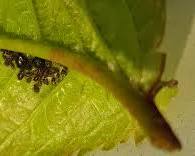
Black Cherry Aphids (Myzus cerasi) are destructive sap-feeding insects that commonly infest cherry trees and related fruit-bearing plants. These small black aphids are important agricultural pests in orchards and home gardens because they feed heavily on tender shoots, leaves, buds, and stems. Large infestations may weaken trees, distort foliage, reduce fruit quality, and interfere with normal plant growth.
Black cherry aphids are especially problematic during spring and early summer when new growth is abundant. Colonies rapidly expand under warm conditions, often covering the undersides of leaves and young shoots in dense clusters. Their feeding activity causes leaves to curl tightly, protecting the aphids from predators and making infestations difficult to manage once established.
In addition to direct feeding damage, black cherry aphids produce sticky honeydew that encourages the growth of black sooty mold fungi. This mold can coat leaves, stems, and fruit surfaces, reducing photosynthesis and further affecting overall tree health.
Quick Facts
- Scientific Name: Myzus cerasi
- Family: Aphididae
- Common Name: Black Cherry Aphid
- Size: Less than 1/8 inch long
- Color: Glossy black
- Habitat: Cherry orchards, gardens, ornamental trees
- Diet: Plant sap
- Status: Agricultural pest
Identification
Black cherry aphids are tiny soft-bodied insects that gather in colonies on cherry trees.
Important identification features include:
- Shiny black coloration
- Pear-shaped body
- Soft-bodied appearance
- Long antennae
- Thin black legs
- Small tailpipe-like cornicles on the abdomen
Winged adults may develop when colonies become overcrowded or environmental conditions change.
Winged aphids possess:
- Transparent wings
- Darker thorax
- Ability to disperse to nearby plants
The insects are usually concentrated on:
- Young leaves
- Shoot tips
- Flower buds
- Undersides of foliage
Distribution and Habitat
Black cherry aphids occur throughout many temperate regions where cherry trees are cultivated.
They are commonly found in:
- Commercial orchards
- Backyard gardens
- Urban landscapes
- Parks
- Nurseries
Preferred host plants include:
- Sweet cherry trees
- Sour cherry trees
- Ornamental cherry species
- Wild cherry trees
These aphids thrive in:
- Warm spring conditions
- Dense foliage
- Rapid plant growth periods
Life Cycle
Black cherry aphids reproduce rapidly and may produce multiple generations in a single growing season.
The life cycle includes:
- Egg
- Nymph
- Adult
Overwintering eggs are laid on cherry trees during autumn.
In spring:
- Eggs hatch into female aphids
- Colonies begin feeding on new growth
- Populations expand rapidly
Many generations reproduce through:
- Parthenogenesis
This means females can produce live offspring without mating.
During summer, winged forms may migrate to secondary host plants before returning to cherry trees later in the season.
Behavior and Feeding Damage
Black cherry aphids feed by piercing plant tissues with specialized mouthparts and extracting sap.
Common feeding damage includes:
- Leaf curling
- Distorted shoots
- Stunted growth
- Wilting foliage
- Reduced fruit development
- Premature leaf drop
Heavy infestations can severely deform:
- Young leaves
- Developing stems
- New branches
As aphids feed, they excrete:
- Honeydew
This sticky substance encourages:
- Sooty mold growth
- Ant activity
- Additional pest attraction
Sooty mold may cover:
- Leaves
- Fruit
- Branches
This fungal coating interferes with photosynthesis and reduces the appearance of fruit crops.
Signs of Infestation
- Curled cherry leaves
- Clusters of black insects on shoots
- Sticky honeydew on foliage
- Black sooty mold growth
- Ants climbing tree trunks
- Distorted branch growth
- Reduced fruit quality
Infestations often begin on:
- Tender spring growth
- Newly emerging shoots
Pest Status
Black cherry aphids are considered serious:
- Fruit tree pests
- Orchard pests
- Garden pests
Heavy infestations may:
- Reduce crop yields
- Weaken trees
- Slow branch growth
- Reduce fruit marketability
Young cherry trees are especially vulnerable because aphid feeding may stunt developing branches and reduce overall vigor.
Natural Predators
Many beneficial insects naturally feed on black cherry aphids.
Important predators include:
- Lady Beetles
- Lacewings
- Hoverfly larvae
- Parasitic wasps
- Predatory bugs
Encouraging beneficial insects often helps reduce aphid populations naturally.
Prevention
Early detection and healthy tree maintenance are important preventive measures.
- Inspect trees during spring growth
- Prune heavily infested shoots
- Avoid excessive nitrogen fertilizer
- Encourage natural predators
- Maintain proper watering practices
- Monitor new growth regularly
- Reduce ant activity near trees
Balanced tree growth helps reduce severe infestations.
Control
Management often involves integrated pest control methods.
Common control strategies include:
- Strong water sprays
- Horticultural oils
- Insecticidal soaps
- Biological control insects
- Targeted insecticides when necessary
Because curled leaves protect aphids from sprays, treatment is most effective:
- Early in the infestation process
Professional orchard management may be required for severe agricultural outbreaks.
Interesting Facts
- Black cherry aphids reproduce extremely quickly during warm weather.
- Colonies are often protected by ants attracted to honeydew.
- Leaf curling helps shield aphids from predators and sprays.
- Winged adults help infest new host plants.
- Heavy infestations may seriously reduce fruit quality.
- Natural predators often help suppress aphid populations.