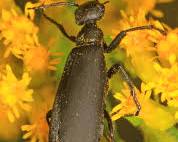
Black Blister Beetles are members of the beetle family Meloidae, a fascinating but potentially problematic group of insects known for producing the defensive chemical cantharidin. This oily toxin can cause painful skin blistering when the beetle is crushed or handled, giving the insects their common name. Although blister beetles play important ecological roles during parts of their life cycle, adult beetles can become serious agricultural pests when they feed heavily on crops, flowers, and garden plants.
Black blister beetles are especially important in agricultural regions because accidental contamination of hay with crushed beetles can poison livestock, particularly horses. Their unusual biology, toxic chemical defenses, and destructive feeding habits make them one of the more unique beetle groups encountered in fields and gardens throughout North America.
Quick Facts
- Scientific Family: Meloidae
- Common Names: Black Blister Beetle, Blister Beetle
- Size: Approximately 1/2 to 1 inch long
- Habitat: Fields, gardens, grasslands, agricultural areas
- Diet: Plant foliage, flowers, pollen
- Status: Agricultural pest and toxic insect
- Defense Mechanism: Cantharidin toxin
Identification
Black blister beetles have distinctive elongated bodies that separate them from many other beetles.
Key identification features include:
- Soft elongated black body
- Narrow thorax
- Flexible wing covers
- Long legs
- Soft leathery appearance
- Relatively slow movement
Unlike many beetles with heavily armored wing covers, blister beetles appear softer and more flexible.
Most species measure:
- 1/2 inch to 1 inch long
When disturbed, the beetles may release:
- Oily defensive fluids containing cantharidin
This toxin can blister human skin and irritate mucous membranes.
Distribution and Habitat
Black blister beetles occur widely throughout:
- The United States
- Southern Canada
- Mexico
- Grassland ecosystems
They are especially common in:
- Agricultural regions
- Pastures
- Gardens
- Flowering crop fields
- Prairies
- Roadside vegetation
Preferred host plants often include:
- Alfalfa
- Potatoes
- Beans
- Tomatoes
- Soybeans
- Flowers
- Weedy vegetation
Large populations frequently develop during:
- Warm summer months
- Dry conditions
- Periods of heavy flowering
Life Cycle
Blister beetles undergo complete metamorphosis consisting of:
- Egg
- Larva
- Pupa
- Adult
Their larval development is highly unusual compared to most beetles.
Female beetles deposit eggs in soil where the larvae hatch and begin searching for food.
Many blister beetle larvae feed on:
- Grasshopper eggs
- Bee nests
- Underground insect eggs
Because of this feeding behavior, immature blister beetles may actually provide beneficial ecological services by reducing grasshopper populations.
As they mature, larvae pass through several distinct developmental stages before pupating in the soil.
Adults emerge during warm weather and begin feeding on vegetation.
Behavior
Adult black blister beetles are active plant feeders that may gather in groups on vegetation.
They commonly feed on:
- Leaves
- Flowers
- Pollen
- Crop foliage
- Tender shoots
Heavy feeding can result in:
- Defoliation
- Flower destruction
- Reduced crop quality
- Plant stress
Blister beetles are most active during:
- Warm sunny weather
- Summer months
- Dry conditions
When threatened, they may:
- Release cantharidin fluid
- Drop from plants
- Feign death
Cantharidin Toxicity
The defining characteristic of blister beetles is the production of:
- Cantharidin
This powerful chemical serves as a defense against predators.
Exposure may cause:
- Skin blistering
- Painful irritation
- Eye irritation
- Digestive injury if consumed
Livestock poisoning becomes a concern when:
- Beetles are crushed into hay
- Contaminated forage is consumed
Horses are particularly sensitive to cantharidin poisoning.
Symptoms in livestock may include:
- Digestive distress
- Colic
- Internal irritation
- Severe illness
Pest Status
Black blister beetles are considered:
- Agricultural pests
- Occasional garden pests
- Livestock hazards
Problems are most serious in:
- Alfalfa production
- Hay harvesting
- Flower crops
- Vegetable gardens
Despite their pest status as adults, their larvae may provide some ecological benefit through predation on grasshopper eggs.
Signs of Infestation
- Groups of black beetles feeding on plants
- Chewed leaves and flowers
- Defoliated crop plants
- Clusters of beetles on blossoms
- Livestock health concerns associated with contaminated hay
Prevention
Preventive measures focus on crop monitoring and safe handling practices.
- Inspect crops during summer
- Monitor flowering plants for beetle clusters
- Avoid crushing beetles by hand
- Wear gloves when handling infested plants
- Control weeds near crop fields
- Inspect hay before feeding livestock
Harvest timing is especially important in hay production systems.
Control
Management strategies may include:
- Integrated pest management
- Field monitoring
- Targeted insecticides
- Mechanical removal
- Weed reduction
- Crop rotation
In small gardens:
- Hand removal using gloves may be effective
Because of cantharidin exposure risk:
- Never crush beetles directly against skin
Ecological Importance
Blister beetles play mixed ecological roles.
Benefits include:
- Larval predation on grasshopper eggs
- Participation in food webs
- Pollination while feeding on flowers
However, adult feeding behavior can create serious agricultural damage under outbreak conditions.
Interesting Facts
- Cantharidin is one of the most powerful natural insect defense chemicals.
- Blister beetle larvae undergo complex developmental changes.
- Adult beetles may swarm flowering crops in large numbers.
- Their soft wing covers distinguish them from many hard-shelled beetles.
- Some species are brightly colored as warning signals to predators.
- Livestock poisoning incidents are most common in improperly harvested hay.