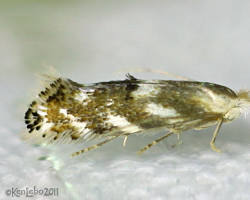
The Birch Skeletonizer Moth (Bucculatrix canadensisella) is a small leaf-feeding moth species known for the distinctive “skeletonizing” damage caused by its larvae on birch leaves. The caterpillars feed on soft leaf tissue while leaving the tougher veins intact, creating a lace-like or skeletal appearance across the foliage. Although adult moths are tiny and rarely noticed, infestations of larvae can become highly visible when birch trees develop browned, scorched-looking leaves during the growing season.
This insect primarily attacks birch trees in forests, ornamental landscapes, parks, and residential yards throughout North America. While healthy mature birch trees can usually tolerate moderate feeding damage, repeated infestations may weaken stressed or younger trees, especially during hot or drought-prone seasons. The birch skeletonizer moth is considered both an ornamental landscape pest and a forest defoliator in areas where birch trees are abundant.
Quick Facts
- Scientific Name: Bucculatrix canadensisella
- Common Name: Birch Skeletonizer Moth
- Family: Bucculatricidae
- Host Plants: Birch trees
- Habitat: Forests, parks, landscapes, residential yards
- Status: Ornamental tree pest
- Primary Damage: Leaf skeletonization
Identification
Adult birch skeletonizer moths are very small, slender insects that are rarely observed directly.
Adult characteristics include:
- Narrow wings
- Light brown or gray coloration
- Fine wing markings
- Body length under 1/4 inch
- Nocturnal activity
The larvae are easier to detect because of the obvious damage they create on leaves.
Larval features include:
- Small pale caterpillars
- Flattened body shape
- Yellowish or greenish coloration
- Surface-feeding behavior
The most recognizable sign is the distinctive “skeletonized” foliage where only leaf veins remain after feeding.
Distribution and Habitat
The birch skeletonizer moth occurs throughout regions of North America where birch trees naturally grow or are planted ornamentally.
Common habitats include:
- Birch forests
- Urban landscapes
- Residential yards
- Parks
- Woodland edges
- College campuses
- Commercial landscapes
The insect is closely associated with:
- Paper birch
- Gray birch
- River birch
- European ornamental birches
Trees weakened by drought, heat stress, or environmental damage may be more susceptible to noticeable infestations.
Life Cycle
Like most moths, the birch skeletonizer undergoes complete metamorphosis consisting of:
- Egg
- Larva
- Pupa
- Adult
Female moths deposit eggs on birch leaves, usually on the undersides where the young larvae are protected.
After hatching:
- Larvae begin feeding on leaf tissue
- Surface feeding removes soft green tissue
- Leaf veins remain intact
- Leaves gradually turn brown or bronze
As larvae mature, they may create tiny silken cocoons attached to leaves where pupation occurs.
Depending on climate conditions, several generations may occur during a single growing season.
Behavior
Larvae feed externally on birch foliage and are most active during warm weather.
Their feeding behavior produces:
- Transparent patches
- Brown leaf surfaces
- Lace-like foliage
- Bronzed leaves
- Premature leaf drop
Heavy infestations may make trees appear scorched or drought-damaged from a distance.
Adult moths are nocturnal and are sometimes attracted to outdoor lighting, though they usually go unnoticed because of their small size.
Pest Status
The birch skeletonizer moth is considered an ornamental tree pest and occasional forest defoliator.
Most damage is aesthetic, but repeated infestations can contribute to tree stress.
Potential impacts include:
- Leaf browning
- Reduced photosynthesis
- Premature leaf drop
- Canopy thinning
- Reduced tree vigor
- Increased susceptibility to other pests
Mature healthy birches can usually survive moderate infestations without serious long-term injury.
However, repeated heavy infestations combined with:
- Drought
- Heat stress
- Poor soil conditions
- Root injury
- Other insect problems
may contribute to decline in susceptible trees.
Signs of Infestation
- Leaves with lace-like appearance
- Brown or bronzed foliage
- Transparent feeding patches
- Leaf skeletonization
- Tiny caterpillars on leaf surfaces
- Silken cocoons attached to leaves
Damage usually becomes most noticeable during mid to late summer.
Prevention
Maintaining healthy birch trees is the most important prevention strategy.
- Water trees during dry periods
- Mulch around root zones
- Avoid trunk and root injuries
- Monitor foliage regularly
- Encourage beneficial predators
- Avoid unnecessary pesticide applications
Healthy trees are more capable of tolerating feeding damage and recovering from seasonal infestations.
Control
Most infestations do not require aggressive treatment.
Management options include:
- Pruning heavily infested branches
- Strong water sprays to dislodge larvae
- Removal of fallen infested leaves
- Biological insecticides such as Bacillus thuringiensis (Bt)
- Encouraging birds and beneficial insects
Bt treatments are most effective against young caterpillars before severe damage develops.
Chemical treatment is usually unnecessary for mature established trees unless infestations become severe over multiple seasons.
Ecological Importance
Although considered pests in ornamental settings, birch skeletonizer moths are also part of natural woodland ecosystems.
Their larvae provide food for:
- Birds
- Predatory insects
- Parasitic wasps
- Spiders
Natural enemies often help regulate populations before outbreaks become severe.
Interesting Facts
- The term “skeletonizer” comes from the vein-only appearance left after feeding.
- Larvae feed externally rather than mining inside leaves.
- Small moth species often cause some of the most visible tree damage.
- Birch skeletonizer outbreaks are more noticeable on ornamental landscape trees.
- Healthy birch trees can often refoliate after moderate feeding damage.