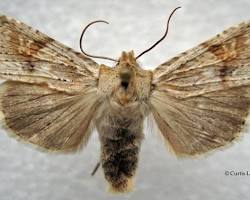
Bethune’s Pinion Moth is a nocturnal moth species belonging to the family Noctuidae, one of the largest moth families in North America. Like many pinion moths, this species is primarily associated with wooded habitats where its caterpillars feed on native trees and shrubs. Although not considered an important pest species, Bethune’s pinion moth contributes to forest ecosystems as both a pollinator and a food source for birds, bats, and predatory insects.
The muted coloration and bark-like wing patterns of this moth provide excellent camouflage during the daytime. Adults are most active at night and are commonly attracted to porch lights, woodland lighting, and illuminated buildings during seasonal emergence periods. While rarely noticed by the general public, Bethune’s pinion moth is part of the diverse nighttime insect community that supports healthy forest biodiversity.
Quick Facts
- Family: Noctuidae
- Order: Lepidoptera
- Habitat: Forests, woodland edges, mature tree stands
- Diet: Host plant foliage (larvae), nectar and moisture sources (adults)
- Status: Native woodland moth
- Activity: Primarily nocturnal
Identification
Bethune’s pinion moth typically displays muted gray, brown, or charcoal coloration that blends naturally into bark and woodland debris.
- Wingspan usually around 1–1.5 inches
- Gray or brown forewings with subtle markings
- Excellent bark camouflage
- Robust noctuid moth body shape
- Hairy thorax and scaled wings
- Nocturnal behavior
The forewings often contain faint bands, lines, or mottled patterns that help conceal the moth while resting on tree trunks.
Like many moths, adults fold their wings flat against the body when resting.
Caterpillars are usually greenish, brown, or gray and blend well with host plant foliage.
Distribution and Habitat
Bethune’s pinion moth occurs in parts of North America where suitable woodland habitats exist.
It is most commonly associated with:
- Deciduous forests
- Mixed woodlands
- Forest edges
- Mature tree stands
- Shrub-dominated habitats
- Natural parks and wooded landscapes
The species depends heavily on the availability of larval host plants and undisturbed vegetation.
Adults are commonly encountered during warmer months when nighttime temperatures support active flight.
Life Cycle
Like all moths and butterflies, Bethune’s pinion moth undergoes complete metamorphosis.
The life cycle includes:
- Egg
- Larva (caterpillar)
- Pupa
- Adult moth
Females deposit eggs on or near suitable host plants. After hatching, caterpillars begin feeding on leaves and tender plant material.
As larvae grow, they molt several times before pupating.
Pupation often occurs:
- In soil
- Within leaf litter
- Beneath bark
- Inside protected woodland debris
Adults emerge seasonally and begin nocturnal mating and feeding activity.
Behavior
Bethune’s pinion moth is primarily nocturnal.
Adults become active shortly after dusk and may fly throughout the night searching for:
- Mates
- Nectar sources
- Moisture
- Suitable egg-laying sites
Like many woodland moths, they are strongly attracted to artificial lighting.
Common nighttime gathering locations include:
- Porch lights
- Streetlights
- Campground lighting
- Forest-edge buildings
- Light traps used by entomologists
During the daytime, adults rest motionless on bark, dead leaves, or shaded surfaces where their camouflage helps protect them from predators.
Ecological Importance
Although not widely recognized, Bethune’s pinion moth contributes to healthy woodland ecosystems.
The species serves as:
- A food source for birds
- Prey for bats
- Prey for spiders and predatory insects
- A pollinator of nighttime flowers
- A component of forest biodiversity
Caterpillars also provide nutrition for many insect-eating wildlife species.
Because moth populations are sensitive to habitat loss, pollution, and pesticide exposure, they are often considered indicators of ecosystem health.
Pest Status
Bethune’s pinion moth is not generally considered a pest species.
Caterpillar feeding usually occurs in natural woodland settings and rarely produces noticeable damage in residential landscapes or gardens.
Unlike serious agricultural moth pests such as armyworms, this species does not normally occur in damaging outbreak populations.
Most encounters involve adult moths resting near lights or around woodland homes during seasonal emergence periods.
Natural Predators
Many predators help regulate moth populations naturally.
Common predators include:
- Bats
- Birds
- Spiders
- Praying mantises
- Ground beetles
- Parasitic wasps
Caterpillars are especially vulnerable to predation while feeding openly on foliage.
Prevention
No prevention measures are typically necessary because this species rarely causes damage.
However, homeowners wishing to reduce nighttime moth activity near buildings may:
- Reduce unnecessary outdoor lighting
- Use yellow “bug” light bulbs
- Keep doors and windows screened
- Limit bright lighting near wooded areas
These measures reduce attraction without harming beneficial nighttime insects.
Control
Control is rarely needed or recommended.
If adult moths become a temporary nuisance around lights, simple exclusion and lighting adjustments are usually sufficient.
Chemical treatment is unnecessary in most situations and may negatively impact beneficial pollinators and other native insects.
Interesting Facts
- Noctuid moths are sometimes called “owlet moths” because of the eye-like markings found in some species.
- Moths are important nighttime pollinators for many native plants.
- The camouflage patterns on woodland moths help protect them from birds during daylight hours.
- Many noctuid moths have sensitive hearing organs that help detect hunting bats.
- Artificial lighting can interfere with normal moth navigation and mating behavior.