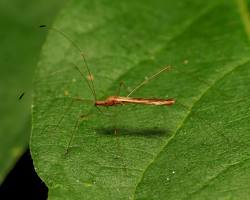
Stilt Bugs are slender true bugs belonging to the family Berytidae. These unusual insects are named for their extremely long, delicate legs that resemble stilts. Although they appear fragile and spider-like at first glance, stilt bugs are active insects commonly found in gardens, grasslands, shrubs, crop fields, and natural vegetation. Most species feed on plant fluids using piercing-sucking mouthparts, while some are opportunistic predators that also consume tiny insects and insect eggs.
Unlike many serious agricultural pests, stilt bugs rarely occur in high enough numbers to cause significant plant damage. In fact, some species may provide mild beneficial effects by feeding on soft-bodied insects and insect eggs. Their unusual appearance, slow movements, and delicate body structure make them one of the more distinctive members of the true bugs.
Quick Facts
- Family: Berytidae
- Order: Hemiptera
- Habitat: Gardens, shrubs, grasslands, agricultural fields
- Diet: Plant sap, seeds, and small insects
- Status: Minor plant feeder and occasional beneficial predator
- Size: Usually 1/8 to 1/4 inch long
Identification
Stilt bugs are easy to recognize because of their extremely thin legs and elongated body shape.
- Long, stilt-like legs
- Narrow cylindrical body
- Slender antennae with clubbed tips in some species
- Brown, tan, or green coloration
- Small body size
- Piercing-sucking mouthparts
The legs are proportionally much longer than the body, giving these insects a fragile and almost stick-like appearance. Many species also possess slightly swollen antenna segments that help distinguish them from other true bugs.
Adults are winged and capable of flight, although they often move slowly through vegetation or remain motionless to avoid predators.
Nymphs resemble miniature wingless adults and gradually develop wings as they mature.
Distribution and Habitat
Members of the Berytidae family occur throughout much of the world and are especially common in warm temperate and tropical climates.
Stilt bugs are commonly found in:
- Gardens
- Crop fields
- Roadside vegetation
- Prairies and grasslands
- Woodland edges
- Shrubs and weeds
- Wildflower habitats
They are especially attracted to areas with dense vegetation where both food sources and shelter are available.
Because many species feed on a variety of plants, they can survive in highly diverse habitats ranging from unmanaged natural landscapes to cultivated agricultural systems.
Life Cycle and Development
Stilt bugs undergo incomplete metamorphosis consisting of three major stages:
- Egg
- Nymph
- Adult
Females lay eggs on stems, leaves, or protected plant surfaces. After hatching, the immature nymphs begin feeding immediately.
Nymphs pass through multiple molts before reaching adulthood.
Unlike butterflies or beetles, there is no pupal stage.
The development rate depends heavily on:
- Temperature
- Humidity
- Food availability
- Seasonal conditions
Several generations may occur annually in warm climates.
Behavior
Stilt bugs are relatively slow-moving insects that rely heavily on camouflage and stealth.
Their thin legs and narrow bodies allow them to blend easily into grasses and stems.
When disturbed, they may:
- Drop from vegetation
- Move slowly behind stems
- Fly short distances
- Remain motionless
Many species feed by inserting their specialized mouthparts into plant tissues and extracting fluids.
Some species are partially predatory and may consume:
- Aphids
- Mite eggs
- Small caterpillars
- Tiny insect larvae
This mixed feeding behavior makes them somewhat unusual among true bugs.
Diet and Feeding Damage
Most stilt bugs feed on plant fluids, seeds, flowers, or soft plant tissue.
They commonly feed on:
- Grasses
- Wildflowers
- Weeds
- Vegetable plants
- Shrubs
Feeding damage is usually minor and may include:
- Small discolored spots
- Minor leaf distortion
- Localized tissue damage
- Occasional wilting
Unlike major crop pests, stilt bugs rarely produce severe infestations capable of causing significant agricultural losses.
In many cases, their populations remain low enough that feeding damage is barely noticeable.
Ecological Importance
Stilt bugs play a modest but important role in ecosystem balance.
They contribute to:
- Natural insect population regulation
- Food webs for predators
- Biodiversity in grassland habitats
- Nutrient cycling within plant communities
Predators of stilt bugs include:
- Spiders
- Birds
- Assassin bugs
- Predatory beetles
- Parasitic wasps
Their mixed feeding habits may occasionally help suppress small pest populations in gardens and agricultural environments.
Pest Status
Stilt bugs are generally considered minor pests or neutral insects.
They occasionally feed on cultivated plants, but serious economic damage is uncommon.
Most populations remain too low to justify chemical control.
In home gardens and landscapes, their presence is usually harmless.
Some species may actually provide limited biological control benefits by feeding on small pest insects.
Prevention
Prevention measures are rarely necessary because stilt bugs seldom become major pests.
However, maintaining healthy plants can reduce stress and minimize feeding impacts.
- Maintain proper irrigation
- Encourage beneficial insects
- Reduce unnecessary pesticide use
- Inspect plants regularly
- Maintain healthy soil conditions
Avoiding broad-spectrum insecticides can help preserve natural predator populations that keep insect communities balanced.
Control
Control is rarely required.
If populations become unusually high, management options may include:
- Hand removal
- Water sprays
- Pruning heavily infested vegetation
- Insecticidal soap applications
Chemical insecticides are usually unnecessary and may harm beneficial insects more than the stilt bugs themselves.
Interesting Facts
- Stilt bugs are part of the order Hemiptera, the same group as assassin bugs and stink bugs.
- Their long legs help them move efficiently through dense vegetation.
- Some species mimic ants or tiny stick insects.
- Many stilt bugs are partially predatory despite being classified primarily as plant feeders.
- The family name Berytidae comes from ancient Greek references to slenderness and delicate structure.