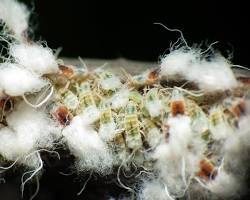
The Beech Blight Aphid (Grylloprociphilus imbricator) is a distinctive sap-feeding insect commonly associated with American beech trees throughout eastern North America. This aphid species is widely recognized for the thick white waxy material that covers its body, giving colonies a fuzzy or cotton-like appearance on tree branches. Although the insects may initially appear alarming to homeowners and landscapers, beech blight aphids rarely cause serious long-term harm to healthy mature trees. Their most noticeable impacts are aesthetic, particularly when large colonies develop and produce sticky honeydew that coats branches, leaves, and objects beneath the tree.
Quick Facts
- Family: Aphididae
- Scientific Name: Grylloprociphilus imbricator
- Habitat: American beech trees and nearby vegetation
- Diet: Plant sap
- Status: Minor tree pest and nuisance insect
Identification
Beech blight aphids are very small, soft-bodied insects usually measuring less than 1/8 inch long. However, the insects themselves are often difficult to see because they are covered with dense white waxy filaments that create a woolly appearance.
Colonies typically appear as:
- Bright white fuzzy clusters on branches
- Cotton-like masses along twigs
- Woolly patches on the undersides of limbs
- Moving white “fluff” when disturbed
One of the most unusual behaviors associated with this species is the synchronized defensive movement performed by entire colonies when threatened. When disturbed, groups of aphids may sway or twitch together in a coordinated motion commonly referred to as the “boogie dance.” This unusual behavior is believed to help deter predators and parasitoids.
The honeydew produced by feeding aphids often causes nearby surfaces to become sticky and shiny. Over time, black sooty mold fungi may develop on this sugary coating.
Distribution and Habitat
Beech blight aphids occur primarily throughout eastern North America in areas where American beech trees (Fagus grandifolia) naturally grow.
They are especially common in:
- Deciduous forests
- Woodland edges
- Parks and recreational areas
- Residential landscapes
- Campgrounds
- Urban shade tree plantings
Colonies typically develop along smaller branches and twigs during warm summer months. They prefer shaded, humid environments where host trees remain healthy and moisture levels are relatively stable.
Although American beech is the primary host, portions of the aphid life cycle may involve alternate hosts in some regions.
Life Cycle and Behavior
Beech blight aphids undergo incomplete metamorphosis consisting of:
- Egg
- Nymph
- Adult
Females reproduce rapidly during favorable weather conditions, allowing populations to expand quickly throughout summer.
Like other aphids, beech blight aphids feed using specialized piercing-sucking mouthparts that tap into plant vascular tissues and extract sap.
The insects feed collectively in dense colonies and continuously excrete excess sugar as honeydew. This sticky material accumulates on:
- Leaves
- Branches
- Vehicles parked beneath trees
- Outdoor furniture
- Sidewalks and patios
Honeydew accumulation often attracts:
- Ants
- Wasps
- Bees
- Other insects seeking sugars
Sooty mold fungi may eventually colonize the honeydew coating, producing blackened surfaces beneath heavily infested trees.
Damage and Tree Impact
Despite their dramatic appearance, beech blight aphids rarely kill or seriously weaken mature trees.
Most damage is considered:
- Cosmetic
- Temporary
- Aesthetic rather than structural
Potential effects include:
- Sticky honeydew accumulation
- Sooty mold growth
- Minor leaf curling
- Localized twig stress
- Nuisance insect activity
Young or stressed trees may occasionally experience more noticeable vigor reduction during heavy infestations, but severe long-term injury is uncommon.
Many natural predators help regulate populations before significant damage develops.
Natural Predators
Beech blight aphids are commonly attacked by beneficial insects and natural enemies including:
- Lady Beetles
- Lacewings
- Hoverfly larvae
- Parasitic wasps
- Predatory bugs
- Spiders
These predators often keep aphid populations below damaging levels in healthy ecosystems.
Pest Status
Beech blight aphids are generally classified as minor nuisance pests.
Although homeowners may become concerned by:
- Heavy white branch coverage
- Sticky honeydew
- Black sooty mold
- Large visible colonies
the insects seldom threaten the long-term survival of established beech trees.
Most infestations decline naturally as predator populations increase or environmental conditions change.
Prevention
- Monitor beech trees during summer months.
- Encourage beneficial predatory insects.
- Avoid excessive nitrogen fertilization.
- Maintain overall tree health through proper watering.
- Reduce unnecessary pesticide use that harms predators.
- Inspect branches periodically for early colony development.
Healthy trees are generally capable of tolerating moderate aphid populations without significant stress.
Control
Control is usually unnecessary for established landscape trees.
When management is desired, common options include:
- Strong water sprays to dislodge colonies
- Horticultural oils
- Insecticidal soaps
- Pruning heavily infested twigs
- Conservation of natural predators
Broad-spectrum insecticides are rarely recommended because they may eliminate beneficial insects that naturally suppress aphid populations.
Interesting Facts
- Beech blight aphids are famous for their synchronized “boogie dance” defensive behavior.
- The white fuzzy coating is made of wax secretions produced by the aphids.
- Honeydew from infestations often supports black sooty mold fungi.
- Large colonies may appear suddenly during warm humid summers.
- Natural predators usually keep infestations under control over time.