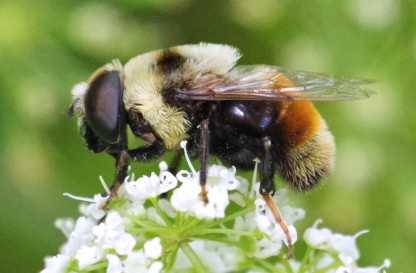
The Yellow-Fronted Flower Fly is a beneficial hoverfly species belonging to the family Syrphidae. These flies are well known for their remarkable resemblance to bees and wasps, a form of protective mimicry that helps deter predators. Despite their bee-like appearance, flower flies are harmless to humans and play an important ecological role as both pollinators and natural predators of plant pests.
Quick Facts
- Family: Syrphidae
- Habitat: Gardens, meadows, orchards, and flowering landscapes
- Diet: Nectar and pollen (adults)
- Status: Beneficial pollinator and biological control insect
Identification
Yellow-fronted flower flies are small to medium-sized flies with bright yellow and black markings that closely resemble bees or small wasps.
- Yellow facial markings or “front” area
- Black and yellow striped body pattern
- Large compound eyes
- Only one pair of wings
- Excellent hovering flight ability
Unlike bees, hoverflies do not possess stingers and are completely harmless to humans.
Their rapid hovering flight and sudden directional changes are among their most recognizable behaviors.
Distribution and Habitat
Yellow-fronted flower flies occur throughout North America and many other temperate regions worldwide.
They are especially common in:
- Flower gardens
- Pollinator habitats
- Orchards
- Agricultural fields
- Meadows and woodland edges
- Urban landscapes with flowering plants
Adults are strongly attracted to blooming flowers where nectar and pollen are abundant.
Life Cycle and Behavior
Flower flies undergo complete metamorphosis consisting of:
- Egg
- Larva
- Pupa
- Adult
Adult females often lay eggs near colonies of aphids or other soft-bodied insects.
The larvae are highly beneficial predators that feed on:
- Aphids
- Scale insects
- Thrips
- Small caterpillars
- Other soft-bodied garden pests
Some larvae may consume dozens of aphids per day, making them valuable biological control agents in gardens and agricultural systems.
Adults feed primarily on nectar and pollen while helping pollinate flowering plants.
Ecological Importance
Yellow-fronted flower flies provide two major ecological benefits:
- Pollination of flowering plants
- Natural pest suppression through larval predation
Because of these dual roles, they are considered highly beneficial insects in:
- Organic gardens
- Pollinator landscapes
- Greenhouses
- Agricultural systems
- Native plant habitats
They help reduce reliance on chemical insecticides by naturally controlling aphid populations.
Pest Status
Yellow-fronted flower flies are not pests.
They do not:
- Bite humans
- Damage plants
- Sting
- Infest structures
Instead, they are widely regarded as beneficial insects that improve plant health and biodiversity.
Prevention
No prevention is necessary since these insects are highly beneficial.
Many gardeners intentionally encourage hoverflies by:
- Planting nectar-rich flowers
- Reducing pesticide use
- Creating pollinator habitats
- Maintaining diverse flowering plants
- Providing native plant species
Control
Control is not recommended.
Protecting flower fly populations can improve natural pest management and support healthy pollinator communities.
In most landscapes, their presence should be encouraged rather than eliminated.
Interesting Facts
- Hoverflies can remain nearly motionless in midair while feeding.
- Many species mimic bees and wasps for protection.
- Larvae are among the most effective natural predators of aphids.
- Flower flies are important pollinators of many crops and wildflowers.
- Some species migrate seasonally over long distances.