Overview
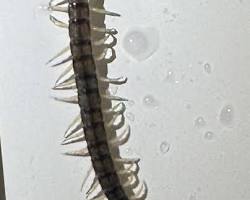
The Bark Centipede is a fast-moving predatory arthropod commonly found beneath loose bark, logs, stones, mulch, and other moist woodland debris. Often referred to as the Eastern Bark Centipede, this species belongs to the class Chilopoda, a group of venomous arthropods characterized by elongated segmented bodies and numerous legs. Bark centipedes are primarily outdoor predators that help regulate populations of insects and other small invertebrates.
Although they occasionally wander indoors, bark centipedes are not considered structural pests. Their presence inside homes is usually associated with excess moisture, damp crawlspaces, decaying organic material, or the availability of prey insects. Unlike termites or beetles, bark centipedes do not feed on wood or damage structures.
Because of their rapid movement and intimidating appearance, bark centipedes are often mistaken for dangerous pests. However, they are generally harmless to humans and are considered beneficial predators in forests, gardens, and landscapes.
Quick Facts
- Class: Chilopoda
- Common Name: Bark Centipede
- Habitat: Forests, mulch, bark, logs, leaf litter
- Diet: Insects, spiders, larvae, small arthropods
- Status: Beneficial predator
- Activity: Nocturnal
- Size: Typically 1–3 inches long
- Behavior: Fast-moving hunter
Taxonomy and Classification
- Kingdom: Animalia
- Phylum: Arthropoda
- Subphylum: Myriapoda
- Class: Chilopoda
Bark centipedes belong to the larger group of centipedes, which are distinguished from millipedes by:
- Having one pair of legs per body segment
- Flattened bodies
- Predatory behavior
- Venom claws used for hunting
They are closely related to other centipede species, including:
Unlike millipedes, which are mostly decomposers, centipedes are active predators that hunt living prey.
Identification
Bark centipedes possess elongated, segmented bodies with numerous legs extending outward from each body segment.
Important identifying characteristics include:
- Flattened body shape
- One pair of legs per segment
- Long antennae
- Fast movement
- Visible venom claws near the head
Coloration commonly includes:
- Reddish brown
- Dark brown
- Yellowish brown
- Orange-brown
Most bark centipedes measure:
- Between 1 and 3 inches long
The body contains many segments, each equipped with legs that allow rapid movement across bark, soil, and leaf litter.
The final pair of legs is often elongated and may resemble antennae.
Distribution and Habitat
Bark centipedes are widely distributed throughout North America and occur in many natural environments with adequate moisture and shelter.
Common habitats include:
- Forests
- Woodlands
- Gardens
- Landscaped yards
- Mulch beds
- Rotting logs
- Leaf litter
- Loose tree bark
They thrive in environments that provide:
- High humidity
- Cool temperatures
- Protected hiding places
- Abundant insect prey
During dry or extremely hot conditions, bark centipedes seek shelter beneath:
- Stones
- Boards
- Wood piles
- Tree bark
- Moist debris
Indoor sightings are more common during periods of heavy rain, drought, or seasonal temperature changes.
Life Cycle
Bark centipedes undergo gradual development rather than complete metamorphosis.
Egg Stage
Females lay eggs in moist protected locations such as:
- Soil
- Leaf litter
- Bark crevices
- Rotting wood
Some species guard their eggs until hatching.
Juvenile Stage
Young centipedes hatch as miniature versions of adults.
As they molt and grow, they gradually develop:
- Additional body segments
- More legs
- Stronger venom claws
Adult Stage
Adult bark centipedes are nocturnal predators that actively hunt prey at night.
Depending on environmental conditions, some centipedes may live:
- Several years
Behavior
Bark centipedes are solitary predators that spend daylight hours hiding in dark moist environments.
At night, they emerge to hunt:
- Small insects
- Larvae
- Spiders
- Mites
- Other arthropods
They capture prey using modified front appendages called:
- Forcipules
These claw-like structures inject venom that immobilizes prey.
Bark centipedes are extremely fast runners and rely on speed rather than web-building or ambush tactics.
Ecological Importance
Bark centipedes play an important ecological role as beneficial predators.
They help regulate populations of:
- Small insects
- Soil pests
- Larvae
- Other arthropods
By controlling insect populations naturally, they contribute to:
- Forest ecosystem balance
- Garden pest reduction
- Nutrient cycling
- Biodiversity
Because they feed on many nuisance insects, bark centipedes are generally considered beneficial outdoors.
Indoor Activity
Bark centipedes occasionally enter homes accidentally.
Indoor activity is often associated with:
- Excess humidity
- Damp basements
- Crawlspaces
- Hidden insect populations
- Organic debris near the structure
Common indoor locations include:
- Bathrooms
- Laundry rooms
- Basements
- Garages
- Crawlspaces
Unlike structural pests, bark centipedes do not:
- Chew wood
- Infest food products
- Damage fabrics
- Reproduce rapidly indoors
Human Interaction
Bark centipedes are not aggressive toward humans.
However, larger individuals may bite if:
- Handled directly
- Trapped against skin
- Threatened
Bites are usually mild and may cause:
- Temporary pain
- Localized redness
- Minor swelling
Serious reactions are uncommon.
Most encounters are harmless and involve centipedes quickly fleeing from light or disturbance.
Signs of Activity
Common signs of bark centipede activity include:
- Fast-moving centipedes under bark or debris
- Occasional indoor sightings
- Presence in damp areas
- Hidden populations beneath mulch or stones
Because they are nocturnal and secretive, infestations are usually minimal and temporary.
Prevention
Preventive measures focus primarily on moisture reduction and habitat modification.
- Reduce excess moisture around foundations
- Remove bark, mulch piles, and wood debris near structures
- Seal cracks and gaps around windows and doors
- Maintain dry crawlspaces and basements
- Improve ventilation
- Trim vegetation away from the structure
- Store firewood away from the home
Reducing populations of other insects may also discourage centipedes from entering buildings.
Control Methods
Control is rarely necessary because bark centipedes are beneficial outdoor predators.
Mechanical Removal
- Vacuum indoor centipedes
- Remove by hand
- Use sticky traps in damp areas
Environmental Management
- Dry damp areas
- Repair leaks
- Improve drainage
- Reduce mulch buildup
Chemical Control
Chemical treatment is rarely required unless centipedes are appearing in unusually large numbers alongside:
- Other moisture-loving pests
- Hidden insect infestations
In most situations, correcting moisture issues solves the problem.
Interesting Facts
- Centipedes are among the oldest terrestrial predators on Earth.
- Bark centipedes move extremely quickly compared to millipedes.
- They use venom claws rather than jaws to capture prey.
- Most species avoid light and remain hidden during the day.
- Centipedes help naturally reduce insect populations in forests and gardens.
Conclusion
The Bark Centipede is a beneficial predatory arthropod commonly found beneath bark, logs, mulch, and moist woodland debris throughout North America. Although its appearance may seem intimidating, this fast-moving hunter plays an important ecological role by feeding on insects and other small arthropods. Bark centipedes rarely become indoor problems, and most sightings are associated with moisture issues or nearby outdoor harborage. Maintaining dry conditions, reducing organic debris, and sealing entry points are usually sufficient to prevent recurring activity.