Overview
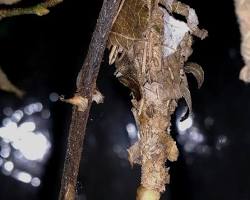
The Banded Hairstreak Butterfly (Satyrium calanus) is a small but striking butterfly species commonly found in oak forests, woodland edges, and natural habitats throughout eastern North America. Recognized by the delicate tail-like projections extending from the hindwings, this butterfly belongs to the family Lycaenidae, a group known for its colorful and often intricately patterned species.
The Banded Hairstreak is valued as a beneficial pollinator and an important component of forest ecosystems. Although the caterpillars feed on oak foliage, they rarely occur in large enough numbers to cause meaningful damage to healthy trees. Instead, the species contributes positively to biodiversity and serves as an important food source for birds, spiders, and predatory insects.
This butterfly is particularly admired for:
- Its elegant white banding
- Tiny hair-like tails on the hindwings
- Association with oak woodlands
- Beneficial ecological role
- Seasonal pollination activity
Like many native butterfly species, the Banded Hairstreak is sensitive to habitat loss and changes in forest composition. Preserving native oak habitats helps support healthy populations of this beautiful woodland butterfly.
Quick Facts
- Family: Lycaenidae
- Scientific Name: Satyrium calanus
- Common Name: Banded Hairstreak Butterfly
- Habitat: Oak forests and woodlands
- Diet: Nectar (adults), oak leaves (larvae)
- Status: Beneficial pollinator
- Primary Host Plants: Oak trees
- Activity Period: Summer
Taxonomy and Classification
- Kingdom: Animalia
- Phylum: Arthropoda
- Class: Insecta
- Order: Lepidoptera
- Family: Lycaenidae
- Genus: Satyrium
- Species: Satyrium calanus
The family Lycaenidae includes:
- Hairstreaks
- Blues
- Coppers
Hairstreak butterflies are known for:
- Small body size
- Thin wing tails
- Complex wing patterns
- Associations with woodland habitats
The Banded Hairstreak is one of several hairstreak species found in North America that rely heavily on oak ecosystems.
Identification
The Banded Hairstreak Butterfly is a small butterfly with subtle but beautiful coloration.
Key identifying features include:
- Brown upper wings
- White banding on the underside of wings
- Thin tail-like extensions on hindwings
- Small orange spots near the hindwing edges
- Compact slender body
The wingspan typically ranges between 1 and 1.5 inches.
The underside pattern is often easier to identify than the upper wing coloration because the butterfly frequently rests with wings closed.
The tiny “hairstreak” tails may help confuse predators by drawing attention away from the butterfly’s head.
Adults are fast flyers and may be difficult to approach in the wild.
Distribution and Habitat
The Banded Hairstreak occurs throughout much of eastern North America.
Its range includes:
- The eastern United States
- The Midwest
- Southern Canada
- Parts of the southeastern United States
This butterfly strongly prefers habitats containing oak trees.
Common habitats include:
- Oak forests
- Woodland edges
- Forest clearings
- Open woodlands
- Nature preserves
- Parks with mature oaks
Adults are commonly observed visiting flowering plants during summer months.
The species is especially abundant in areas with:
- Native hardwood forests
- Mixed deciduous woodlands
- Minimal pesticide exposure
- Healthy understory vegetation
Life Cycle
Like all butterflies, the Banded Hairstreak undergoes complete metamorphosis.
Egg Stage
Females lay eggs on or near host oak trees.
Eggs are usually deposited on:
- Twigs
- Buds
- Small branches
The species often overwinters in the egg stage.
Larval Stage
Caterpillars hatch in spring and begin feeding on young oak foliage.
The caterpillars are:
- Green or brownish
- Flattened in appearance
- Well camouflaged against leaves
Larvae feed discreetly and rarely cause noticeable defoliation.
Pupal Stage
After completing development, caterpillars pupate in protected areas such as:
- Leaf litter
- Bark crevices
- Vegetation near the host tree
The chrysalis stage allows the transformation into the adult butterfly.
Adult Stage
Adults emerge during summer and feed on nectar from flowering plants.
Adult butterflies are active during warm sunny conditions and spend much of their time:
- Flying through woodland openings
- Resting on leaves
- Feeding on flowers
- Searching for mates
Behavior and Ecology
The Banded Hairstreak Butterfly is an important part of woodland ecosystems.
Adult butterflies primarily feed on nectar from:
- Milkweed
- Goldenrod
- Dogbane
- Native wildflowers
- Flowering shrubs
During nectar feeding, adults assist with pollination by transferring pollen between flowers.
The caterpillars serve as food for:
- Birds
- Spiders
- Predatory insects
- Parasitic wasps
The butterfly’s coloration and wing patterns provide camouflage against predators.
Some hairstreak butterflies also use rapid wing movements to mimic antennae at the rear of the body, confusing predators about which direction the butterfly is facing.
Relationship with Oak Trees
Oak trees are essential to the survival of the Banded Hairstreak.
The larvae rely on oak foliage as their primary food source.
Preferred hosts may include:
- White oak
- Black oak
- Red oak
- Chestnut oak
Despite feeding on leaves, the caterpillars rarely cause significant damage because:
- Populations remain relatively low
- Feeding is dispersed
- Healthy trees tolerate minor leaf loss
The species is therefore not considered an important forest pest.
Pest Status
The Banded Hairstreak Butterfly is not considered a pest.
Instead, it is regarded as:
- A beneficial pollinator
- A native butterfly species
- An ecologically important insect
- A component of healthy forest ecosystems
Larval feeding on oak leaves is generally minimal and does not threaten tree health.
Because of its positive ecological role, conservation rather than control is encouraged.
Conservation and Threats
Like many native butterflies, the Banded Hairstreak faces several environmental pressures.
Threats include:
- Habitat destruction
- Deforestation
- Pesticide exposure
- Loss of native oak forests
- Climate-related environmental changes
Conservation efforts often focus on:
- Protecting oak woodlands
- Reducing pesticide use
- Planting native nectar plants
- Preserving woodland edges
Supporting native pollinator habitats benefits not only hairstreak butterflies but also many other insects and wildlife species.
Human Interaction
The Banded Hairstreak Butterfly is harmless to humans.
It:
- Does not bite
- Does not sting
- Does not spread disease
- Does not infest structures
Many butterfly enthusiasts and photographers seek out this species because of its subtle beauty and woodland habitat preferences.
Butterfly gardens with native flowering plants may occasionally attract adult hairstreaks during summer.
Interesting Facts
- The small tails on the hindwings resemble antennae and help confuse predators.
- The species is closely tied to oak forest ecosystems.
- Adults are often difficult to spot because of their small size and camouflage.
- Hairstreak butterflies belong to one of the largest butterfly families in the world.
- The Banded Hairstreak is considered a valuable native pollinator species.
Conclusion
The Banded Hairstreak Butterfly (Satyrium calanus) is a small, elegant woodland butterfly commonly associated with oak forests throughout eastern North America. Recognized by its delicate wing tails and white banding, this beneficial pollinator plays an important ecological role in forest ecosystems. Although its caterpillars feed on oak foliage, they rarely cause noticeable damage and are not considered pests. Instead, the species contributes to biodiversity, pollination, and healthy woodland food webs. Protecting native oak habitats and pollinator-friendly landscapes helps ensure the continued survival of this beautiful native butterfly.