Overview
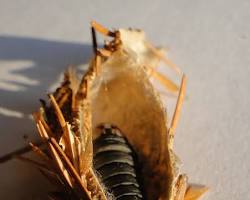
The Banded Argiope Spider (Argiope trifasciata), also commonly known as the Banded Garden Spider, is a large and highly recognizable orb-weaving spider found throughout much of North America. This species is admired for its striking banded abdomen, impressive web-building abilities, and important ecological role as a beneficial predator of flying insects. Unlike harmful spiders that may invade homes or pose medical concerns, the Banded Argiope is considered harmless to humans and extremely valuable in gardens, agricultural settings, and natural ecosystems.
The spider belongs to the family Araneidae, a group commonly referred to as orb-weaver spiders. Members of this family are famous for constructing large, symmetrical circular webs designed to trap flying prey.
Banded Argiope Spiders are most often encountered in:
- Gardens
- Tall grassy fields
- Meadows
- Roadside vegetation
- Agricultural landscapes
- Shrubbery and hedges
During late summer and early fall, their large webs become highly visible when covered with morning dew or illuminated by sunlight. Because they feed heavily on flies, grasshoppers, moths, mosquitoes, and other insects, they are considered one of the most beneficial spiders found in outdoor environments.
Quick Facts
- Family: Araneidae
- Scientific Name: Argiope trifasciata
- Common Names: Banded Argiope Spider, Banded Garden Spider
- Habitat: Gardens, fields, tall grass, shrubs
- Diet: Flying insects
- Status: Beneficial predator
- Web Type: Orb-shaped circular web
- Activity: Diurnal (active during the day)
Taxonomy and Classification
- Kingdom: Animalia
- Phylum: Arthropoda
- Class: Arachnida
- Order: Araneae
- Family: Araneidae
- Genus: Argiope
- Species: Argiope trifasciata
The genus Argiope contains several well-known orb-weaving spiders recognized for:
- Large body size
- Distinctive coloration
- Massive circular webs
- Beneficial predatory behavior
The Banded Argiope is closely related to the Yellow Garden Spider (Argiope aurantia), though the banded species has a more elongated abdomen with horizontal striping.
Identification
The Banded Argiope Spider is one of the easiest orb-weavers to identify due to its size and striking coloration.
Important identifying features include:
- Long oval abdomen
- Alternating black, yellow, and white bands
- Silvery cephalothorax
- Long banded legs
- Large orb-shaped web
Females are significantly larger than males and may reach over 1 inch in body length, not including the legs.
Males are:
- Much smaller
- Less colorful
- Often difficult to notice near the female’s web
The spider’s web is also distinctive. It is:
- Large and circular
- Suspended vertically
- Built between vegetation
- Often containing a zigzag silk pattern called a stabilimentum
This zigzag silk decoration may help:
- Warn birds away from the web
- Attract insect prey
- Strengthen the structure
Distribution and Habitat
The Banded Argiope Spider is widely distributed across North America and parts of Central America.
It is especially common in:
- The United States
- Southern Canada
- Mexico
The species thrives in open sunny environments where flying insects are abundant.
Preferred habitats include:
- Gardens
- Fields
- Tall grasslands
- Roadside vegetation
- Farm edges
- Natural meadows
The spider usually positions its web in areas where insect flight activity is high.
Webs are commonly attached to:
- Tall weeds
- Shrubs
- Fence lines
- Garden plants
- Field vegetation
Web Construction
The web-building behavior of the Banded Argiope is one of its most fascinating traits.
The spider spins a large orb-shaped web using strong silk threads.
These webs are designed to:
- Capture flying insects
- Absorb prey impact
- Remain flexible in wind
The spider usually rests in the center of the web with its legs held in pairs, forming an X-shaped posture.
Web construction typically occurs:
- During early morning
- At night
- After web damage
Damaged webs are often rebuilt or repaired daily.
Behavior and Feeding
The Banded Argiope Spider is a highly effective ambush predator.
Rather than hunting actively, it relies on its web to trap prey.
Common prey items include:
- Flies
- Mosquitoes
- Grasshoppers
- Moths
- Bees
- Wasps
- Small beetles
When prey becomes trapped:
- The spider rapidly approaches
- Bites the prey to inject venom
- Wraps it in silk
- Consumes the liquefied tissues
The venom is designed to subdue insects and is not considered medically significant to humans.
These spiders are generally non-aggressive and will usually retreat rather than bite if disturbed.
Life Cycle
The Banded Argiope Spider has a seasonal life cycle closely tied to warm weather.
Mating
Males approach females cautiously to avoid being mistaken for prey.
Mating usually occurs in late summer.
Egg Sac Production
After mating, females produce egg sacs made from silk.
The sacs are:
- Brown or tan
- Papery in texture
- Attached to vegetation
Each egg sac may contain hundreds of eggs.
Overwintering
The eggs overwinter inside the protective sac.
Adult spiders usually die after the first hard frost.
Spiderlings
Young spiders hatch in spring and disperse using a process called ballooning.
During ballooning:
- Spiderlings release silk threads
- Wind carries them through the air
- They colonize new areas
Pest Status
The Banded Argiope Spider is considered a highly beneficial predator.
Benefits include:
- Natural insect control
- Reduction of pest fly populations
- Predation on mosquitoes and grasshoppers
- Reduced need for pesticides
Unlike nuisance spiders, this species:
- Rarely enters homes
- Does not infest structures
- Is not aggressive
- Provides ecological benefits
Because of these traits, no control is generally recommended.
Human Interaction
The Banded Argiope Spider often causes concern because of its large size and bold appearance, but it poses very little threat to humans.
Bites are:
- Extremely rare
- Mild in severity
- Comparable to a bee sting in most cases
The spider typically responds to disturbance by:
- Retreating
- Dropping from the web
- Vibrating the web rapidly
Many gardeners intentionally protect these spiders because of their ability to reduce pest insect populations naturally.
Ecological Importance
The Banded Argiope plays an important ecological role as a predator of flying insects.
Its presence helps maintain natural insect balance within ecosystems.
Benefits include:
- Controlling agricultural pests
- Reducing mosquito populations
- Supporting biological pest management
- Serving as prey for birds and reptiles
The species also contributes to biodiversity in healthy outdoor environments.
Management and Prevention
Because the spider is beneficial, management is rarely necessary.
If removal is desired:
- Relocate the spider gently outdoors
- Remove webs manually
- Reduce tall vegetation near structures
- Avoid broad pesticide use
Broad-spectrum insecticides may unintentionally kill beneficial spiders and other natural predators.
Conclusion
The Banded Argiope Spider (Argiope trifasciata) is a large, beneficial orb-weaving spider known for its striking banded abdomen and impressive circular webs. Commonly found in gardens, fields, and grassy landscapes, this species helps control populations of flies, mosquitoes, grasshoppers, and other insects. Despite its intimidating appearance, the Banded Argiope is harmless to humans and provides important ecological benefits as a natural predator. Its beautiful web structures and valuable role in biological pest control make it one of the most beneficial spiders found in North American outdoor environments.