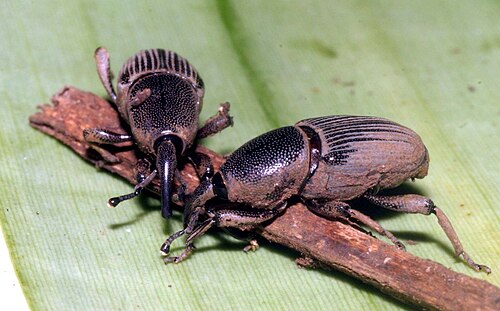
Banana Weevils (Cosmopolites sordidus), also known as Banana Root Borers, are among the most destructive insect pests of banana and plantain crops worldwide. These small, dark weevils cause their greatest damage during the larval stage, when white, legless grubs tunnel deep into the corm and lower pseudostem of the plant. This feeding disrupts water and nutrient movement, weakens the plant base, reduces fruit yield, and can cause plants to topple during wind or heavy rain. In tropical and subtropical growing regions, Banana Weevils are a major threat to commercial plantations, small farms, and backyard banana plantings.
The conflict with Banana Weevils is especially serious because most damage is hidden underground or inside the plant. By the time leaves yellow, growth slows, or a fruiting plant falls over, the corm may already contain extensive larval tunnels. Effective management depends on preventing introduction, using clean planting material, removing crop residues, trapping adults, and protecting young plants before weevil populations become established.
Taxonomy and Classification
Banana Weevils belong to the large beetle family Curculionidae, commonly known as weevils or snout beetles. Members of this family have a distinctive elongated snout, or rostrum, used for feeding and egg placement.
- Order: Coleoptera
- Family: Curculionidae
- Genus: Cosmopolites
- Species: Cosmopolites sordidus
- Common Names: Banana Weevil, Banana Root Borer
Banana Weevils undergo complete metamorphosis with egg, larval, pupal, and adult stages. The life cycle takes place within or immediately around the base of banana and plantain plants. Adults lay eggs in small holes or cracks near the corm, where larvae can quickly tunnel into protected plant tissue after hatching.
Physical Description
Adult Banana Weevils are small, robust beetles measuring about 1/2 inch long. They are shiny dark brown to black and are usually seen near the base of banana plants, especially at night.
- Adult Size: About 1/2 inch long
- Color: Dark brown to black
- Body Shape: Hard-bodied, oval, and robust
- Snout: Elongated rostrum typical of weevils
- Behavior: Nocturnal, slow-moving, and secretive
- Larva: White, C-shaped, legless grub inside the corm
Larvae are the most damaging stage. They feed by boring galleries through the corm and lower pseudostem. These tunnels may be packed with frass and decaying plant tissue. When infested corms are cut open, feeding galleries, brown discoloration, and soft rotting areas may be visible.
Common signs of infestation include:
- Tunnels inside the corm
- Reddish-brown or dark feeding galleries
- Weak or stunted plants
- Small leaves and poor growth
- Reduced fruit bunch size
- Yellowing or wilting foliage
- Plants toppling during storms
- Adults hiding in plant debris near the base
Distribution and Habitat
Banana Weevils are found in nearly all major banana and plantain-producing regions of the world. They are most common in warm, humid tropical and subtropical climates where host plants grow year-round.
Common habitats include:
- Commercial banana plantations
- Plantain farms
- Smallholder tropical farms
- Backyard banana plantings
- Fields with old corms and pseudostem residues
- Moist shaded areas around banana mats
The pest is often spread through infested planting material. Suckers, corms, and plant parts moved from one field to another may contain eggs, larvae, pupae, or hidden adults. Once established, adults may survive for long periods in crop residues and nearby shelter.
Life Cycle
Female Banana Weevils lay eggs singly in small cavities chewed into the corm or lower pseudostem. After hatching, larvae bore into the plant and feed internally. Their tunnels expand as the grubs grow, weakening the plant base and interfering with nutrient flow.
Larvae eventually pupate within the corm or nearby plant tissue. Adults emerge and remain hidden during the day under debris, leaf sheaths, soil cracks, or pieces of cut pseudostem. At night, they move to feed, mate, and lay eggs.
In warm climates, development can occur continuously, and overlapping generations may be present. Adult weevils are long-lived and may survive for many months or even longer, allowing populations to persist between crop cycles if residues are not removed.
Behavior and Crop Damage
Banana Weevils are difficult pests because both their behavior and damage are hidden. Adults are nocturnal and rarely visible during the day, while larvae feed deep inside the plant where sprays and predators have limited access.
Larval tunneling causes several major problems:
- Disrupted water and nutrient flow
- Weak attachment between roots and pseudostem
- Reduced plant vigor
- Delayed growth
- Lower fruit yield
- Increased susceptibility to disease
- Toppling of fruit-bearing plants
Young plants may fail to establish, while older plants may produce smaller bunches or collapse before harvest. In areas with repeated infestations, productivity can decline year after year unless management is improved.
Management and Prevention
Banana Weevil control relies on integrated pest management (IPM). Because larvae are protected inside the corm, management focuses on preventing infestation, reducing adult populations, and removing breeding material.
| Management Strategy | Description | Purpose |
|---|---|---|
| Clean Planting Material | Use inspected, pared, and treated suckers or certified clean planting stock. | Prevents introducing hidden larvae or adults into new fields. |
| Crop Sanitation | Cut up, remove, or destroy harvested pseudostems and old corms. | Eliminates breeding sites and shelters. |
| Corm Traps | Place fresh corm or pseudostem pieces on the ground and collect adults hiding beneath them. | Reduces adult populations through trapping. |
| Pheromone Traps | Use lure-baited traps to attract adult weevils. | Improves monitoring and mass trapping. |
| Targeted Insecticides | Apply registered products around the plant base when needed. | Targets adults before egg laying. |
Sanitation is one of the most important practices. Old corms and pseudostems left in the field provide ideal breeding sites. Cutting residues into small pieces and exposing them to drying can reduce survival of developing weevils.
Corm traps are useful for monitoring and suppression. Fresh pieces of banana corm or pseudostem attract adults seeking shelter. Traps should be checked regularly, and collected weevils should be destroyed.
Biological and Cultural Control
Biological control research includes entomopathogenic fungi, parasitic nematodes, predators, and improved soil health practices. Some beneficial organisms can attack larvae or adults, but results vary depending on climate, soil moisture, and production system.
Cultural controls are especially important in smallholder systems. Rotating fields where practical, avoiding movement of infested planting material, maintaining vigorous plants, improving drainage, and reducing abandoned banana mats can all lower pest pressure.
Conservation and Research
Banana Weevils are managed as severe tropical agricultural pests. Research focuses on resistant banana and plantain varieties, improved pheromone trap designs, biological control agents, hot-water treatment of planting material, and integrated systems that reduce reliance on broad insecticides.
Because banana and plantain are staple foods in many regions, controlling Banana Weevils is important for both farm income and food security.
Conclusion
Banana Weevils are destructive pests of banana and plantain crops, with larvae that tunnel through the corm and lower pseudostem. Their hidden feeding causes stunting, weak plants, reduced yields, and toppling of fruit-bearing stems. Since adults are nocturnal and larvae are protected inside plant tissue, successful control depends on prevention, clean planting material, sanitation, trapping, and carefully timed treatments. Integrated pest management is the best long-term approach for reducing crop loss and protecting banana production.