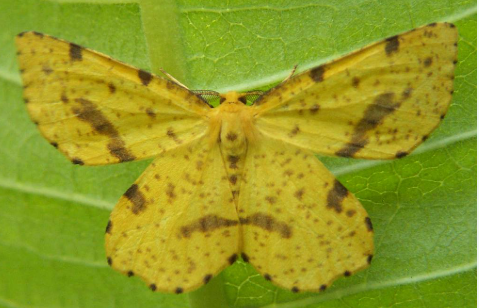
Attentive Crocus Moth (Heliothis crocea) is a species of moth in the family Noctuidae, commonly known as owlet moths. Native to parts of Europe, Asia, and occasionally recorded in North America, this species is associated with flowering plants and open habitats. Despite its name, it is not considered a major pest and is generally of limited economic importance.
The Attentive Crocus Moth is typically regarded as a minor or incidental plant feeder, with its larvae feeding on flowers and foliage of various herbaceous plants.
Taxonomy and Classification
- Common Name: Attentive Crocus Moth
- Scientific Name: Heliothis crocea
- Order: Lepidoptera
- Family: Noctuidae
- Type: Flower-feeding moth
The genus Heliothis includes several species that are known to feed on flowers and reproductive parts of plants, though not all are economically significant.
Identification and Physical Description
The Attentive Crocus Moth is a small to medium-sized moth, with a wingspan typically ranging from 1 to 1.5 inches. It is generally inconspicuous in appearance.
Key identifying features include:
- Brown to tan forewings with subtle markings
- Lighter hindwings, often pale or whitish
- Slender body typical of noctuid moths
The coloration provides camouflage against soil, bark, and plant material.
Larvae are caterpillar-like and may vary in color from green to brown, depending on their environment and host plants.
Life Cycle
The Attentive Crocus Moth undergoes complete metamorphosis, progressing through egg, larva, pupa, and adult stages.
Females lay eggs on host plants, often near flowers or buds. After hatching, larvae feed on plant tissues, particularly flowers and developing seeds.
Larvae pass through several instars before pupating, typically in soil or plant debris.
Adults emerge to reproduce, completing the life cycle. The number of generations per year varies depending on climate.
Host Plants
The larvae of the Attentive Crocus Moth feed on a range of herbaceous plants, including:
- Flowering plants such as crocus and related species
- Various wildflowers
This feeding behavior is generally limited in scope and does not typically result in severe damage.
Damage and Economic Importance
Larval feeding may result in:
- Damage to flowers and buds
- Reduced seed production
However, infestations are usually low in intensity, and the species is not considered a significant agricultural pest.
Habitat and Distribution
The Attentive Crocus Moth is found in regions with suitable climates and host plants. It is commonly associated with:
- Open fields and meadows
- Gardens and cultivated landscapes
- Grasslands and semi-natural habitats
Its distribution depends on the availability of flowering host plants.
Behavior and Ecology
Adult moths are primarily nocturnal and are often attracted to light sources. During the day, they rest in concealed locations such as foliage or ground cover.
Larvae feed on flowers and may remain partially hidden within plant structures.
As part of the ecosystem, this species contributes to food webs, serving as prey for birds, bats, and other insectivores.
Adults may also contribute to pollination when visiting flowers for nectar.
Diet
The diet varies by life stage:
- Larvae: Flower parts, buds, and seeds
- Adults: Nectar from flowers
This feeding behavior supports both plant interactions and ecological processes.
Human Interaction and Risks
The Attentive Crocus Moth is harmless to humans. It does not bite or sting and poses no health risks.
Its impact is limited to minor plant damage in localized areas.
Management and Control
Management is rarely necessary due to the limited impact of this species.
If control is desired, measures may include:
- Manual removal of larvae
- Encouraging natural predators
- Maintaining plant health
Chemical control is generally not required.
Prevention
Preventative measures include:
- Regular inspection of plants
- Maintaining diverse plantings to support predators
- Avoiding excessive pesticide use
Healthy ecosystems naturally regulate populations of minor pests.
Related Articles
Conclusion
The Attentive Crocus Moth is a relatively minor species with limited impact on plants. While its larvae feed on flowers, the damage is typically minimal and does not pose a significant threat to plant health.
As part of natural ecosystems, it contributes to biodiversity and food webs, making it a species of ecological interest rather than concern.