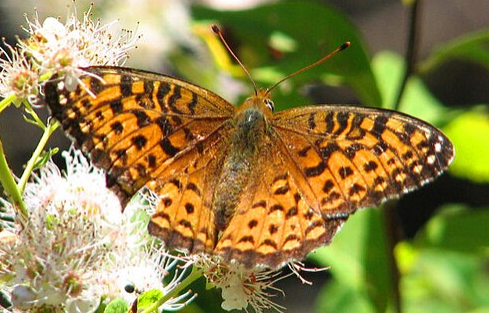
The Atlantis Fritillary Butterfly (Speyeria atlantis) is a medium-to-large butterfly species found throughout northern North America. Like other fritillaries, it is known for its bright orange wings marked with black spots and silver patches on the underside. The species is often associated with woodland edges, meadows, and open forest habitats where its larval host plants grow.
Although it does not damage crops or garden plants, the Atlantis Fritillary plays an important ecological role as a pollinator. Butterflies in the genus Speyeria are particularly dependent on violet plants (Viola species), which serve as the primary food source for their caterpillars.
Taxonomy and Classification
- Order: Lepidoptera
- Family: Nymphalidae
- Genus: Speyeria
- Species: Speyeria atlantis
Physical Description
Adult Atlantis Fritillary butterflies typically have a wingspan ranging from 50–65 mm. Their upper wings are orange with black spots, while the underside of the hindwings displays silvery markings that reflect light.
The caterpillars are dark with small spines and feed primarily on violet leaves.
Distribution and Habitat
This species occurs widely across Canada and the northern United States. Preferred habitats include:
- Moist woodland edges
- Mountain meadows
- Forest clearings
- Prairies with native violets
Behavior and Ecology
Adults feed on nectar from a wide variety of flowering plants including milkweed, thistle, and goldenrod. These feeding behaviors make them important members of local pollinator communities.
The larvae overwinter in leaf litter and resume feeding in spring once violet plants emerge.
Management and Conservation
Atlantis Fritillaries do not require pest control. Conservation efforts focus on preserving native plant habitats and reducing pesticide use that can harm beneficial insects.