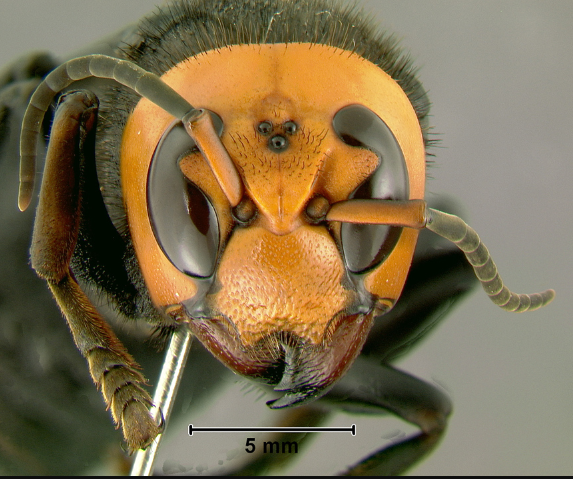
Asian Giant Hornet (Vespa mandarinia), also known as the “murder hornet,” is the largest hornet species in the world. Native to East Asia, it has gained attention due to its size, powerful sting, and potential impact on honey bee populations. While it has been detected in limited areas outside its native range, it is not widely established in North America.
The Asian Giant Hornet is considered a significant pest species due to its ability to devastate honey bee colonies and its potential threat to human health when provoked.
Taxonomy and Classification
- Common Name: Asian Giant Hornet
- Scientific Name: Vespa mandarinia
- Order: Hymenoptera
- Family: Vespidae
- Type: Social wasp (hornet)
The genus Vespa includes several hornet species, but V. mandarinia is the largest and among the most aggressive when defending its nest.
Identification and Physical Description
The Asian Giant Hornet is easily recognizable due to its large size and distinctive coloration. Adults typically measure 1.5 to 2 inches in length, with queens reaching up to 2.5 inches.
Key identifying features include:
- Large orange or yellow head with prominent eyes
- Dark brown to black thorax
- Abdomen with bold yellow and black bands
- Powerful mandibles for cutting and killing prey
Its size alone distinguishes it from most native wasps and hornets.
Life Cycle
The Asian Giant Hornet undergoes complete metamorphosis, progressing through egg, larva, pupa, and adult stages.
Queens emerge in spring and establish nests, often in underground cavities such as rodent burrows. They lay eggs that develop into workers, which then take over foraging and nest maintenance.
Colonies grow through summer and may produce hundreds of individuals. In late season, reproductive males and new queens are produced.
After mating, new queens overwinter, while the rest of the colony dies off.
Habitat and Distribution
The Asian Giant Hornet is native to East Asia, including countries such as Japan, China, and Korea. It prefers:
- Forested and mountainous regions
- Rural and agricultural areas
- Underground nesting sites
In North America, isolated detections have occurred, particularly in the Pacific Northwest, but widespread establishment has not been confirmed.
Behavior and Ecology
The Asian Giant Hornet is a social insect that lives in colonies. Workers forage for food and defend the nest aggressively if threatened.
This species is particularly known for its predation on honey bees. A small group of hornets can attack and destroy an entire hive in a short period, killing adult bees and feeding larvae to their own young.
While generally not aggressive toward humans unless provoked, they will defend their nest vigorously.
Diet
The diet of the Asian Giant Hornet includes:
- Other insects (especially honey bees)
- Tree sap
- Fruit and plant juices
Larvae are fed protein from captured prey, while adults consume sugary substances.
Damage and Economic Importance
The primary concern associated with the Asian Giant Hornet is its impact on beekeeping:
- Destruction of honey bee colonies
- Loss of pollinators
- Economic impact on agriculture
This species can threaten pollination services essential for many crops.
Human Interaction and Risks
The Asian Giant Hornet has a potent sting that can be extremely painful and, in rare cases, dangerous, particularly for individuals with allergies or those receiving multiple stings.
Symptoms may include:
- Severe pain and swelling
- Allergic reactions
- Potential medical complications in extreme cases
Encounters are rare, and most incidents occur when nests are disturbed.
Management and Control
Management of Asian Giant Hornets requires professional intervention:
- Report sightings to local agricultural or environmental authorities
- Avoid disturbing nests
- Use trained pest control professionals for removal
Efforts often focus on early detection and eradication to prevent establishment.
Prevention
Preventative measures include:
- Monitoring for unusual large hornets
- Protecting apiaries with traps or barriers
- Sealing potential nesting sites near structures
Public awareness is key to preventing spread.
Related Articles
Conclusion
The Asian Giant Hornet is a large and powerful insect with significant ecological and economic implications, particularly in relation to honey bee populations. While it poses risks when disturbed, it is not inherently aggressive toward humans.
Through monitoring, reporting, and professional management, its potential impact can be minimized, protecting both ecosystems and agricultural systems.