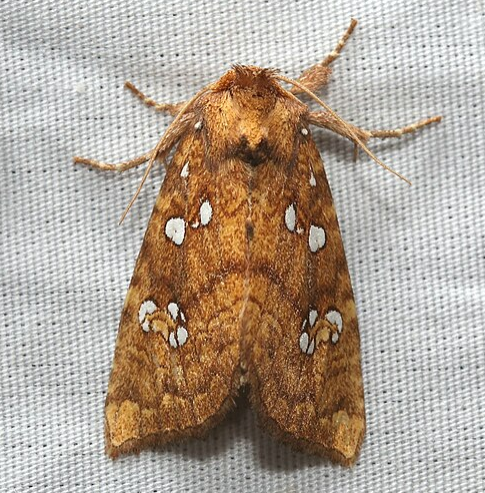
Ash-tip Borer Moth (Eucosma fraxinivora) is a small moth species in the family Tortricidae, commonly known as leafroller or tortricid moths. Native to North America, this species is primarily associated with ash trees (Fraxinus spp.), where its larval stage feeds within shoots and buds. It is considered a minor pest of ash trees, particularly in nurseries and young plantings.
While not typically a major threat to mature trees, infestations of Ash-tip Borer Moth larvae can cause deformities in new growth, making it a concern in ornamental and forestry settings.
Taxonomy and Classification
- Common Name: Ash-tip Borer Moth
- Scientific Name: Eucosma fraxinivora
- Order: Lepidoptera
- Family: Tortricidae
- Type: Shoot-boring moth (tree pest)
The family Tortricidae includes many species whose larvae bore into plant tissues, including shoots, stems, and fruits.
Identification and Physical Description
Adult Ash-tip Borer Moths are small, with a wingspan typically ranging from 1/2 to 3/4 inch. They are generally inconspicuous in appearance.
Key identifying features include:
- Gray to brown forewings with subtle mottled patterns
- Compact body typical of tortricid moths
- Wings held roof-like over the body at rest
Larvae are more noticeable and are responsible for damage. They are typically:
- Small, cream-colored caterpillars
- Hidden within shoots or buds
The concealed feeding behavior makes them difficult to detect until damage becomes visible.
Life Cycle
The Ash-tip Borer Moth undergoes complete metamorphosis, progressing through egg, larva, pupa, and adult stages.
Females lay eggs on developing shoots or buds of ash trees. After hatching, larvae bore into the plant tissue and begin feeding internally.
Larval feeding continues within the shoots, where they are protected from external conditions and predators.
After completing development, larvae pupate within the plant or nearby debris. Adults emerge to mate and lay eggs, continuing the cycle.
There is typically one generation per year, though this can vary by region.
Host Plants
The primary host plants for the Ash-tip Borer Moth are:
- Ash trees (Fraxinus spp.)
Young trees and new growth are particularly susceptible to infestation.
Damage and Symptoms
Larval feeding within shoots and buds causes several characteristic symptoms:
- Wilting or dieback of new shoots
- Distorted or stunted growth
- Dead terminal buds
- Multiple branching (bushy appearance due to damaged tips)
While damage is usually not fatal to established trees, it can affect the shape and growth of young trees.
Habitat and Distribution
The Ash-tip Borer Moth is found in regions where ash trees are present, including much of North America. It is commonly associated with:
- Forests and woodlands
- Urban and suburban landscapes
- Nurseries and managed plantings
Its distribution is closely tied to the presence of host trees.
Behavior and Ecology
Larvae are internal feeders, spending most of their development within plant tissues. This behavior protects them from predators and environmental stress.
Adults are nocturnal and are rarely noticed, as they are small and inconspicuous.
Natural enemies, including parasitoid wasps and predatory insects, help regulate populations.
Although it can cause damage, the Ash-tip Borer Moth is part of the natural ecosystem and contributes to ecological interactions.
Management and Control
Management is typically only necessary in nurseries or where tree form is important:
- Pruning: Remove and destroy infested shoots
- Monitoring: Inspect new growth regularly
- Biological control: Encourage natural predators
- Insecticides: Use targeted treatments if infestations are severe
Early detection is key to minimizing damage.
Prevention
Preventative measures focus on maintaining tree health and reducing susceptibility:
- Promote vigorous growth through proper care
- Inspect nursery stock before planting
- Remove damaged or infested growth promptly
Healthy trees are better able to tolerate minor infestations.
Human Interaction and Risks
The Ash-tip Borer Moth is harmless to humans. It does not bite or sting and poses no health risks.
Its impact is limited to plant health, particularly in young or ornamental ash trees.
Related Articles
Conclusion
The Ash-tip Borer Moth is a minor but noteworthy pest of ash trees, particularly affecting new growth and young plantings. While it rarely causes serious damage, its feeding can impact tree form and development.
With proper monitoring and management, its effects can be minimized, allowing ash trees to remain healthy and productive in both natural and managed environments.