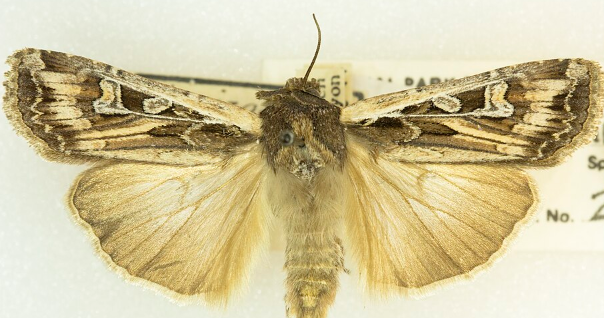
Army Cutworm Moth (Euxoa auxiliaris) is a species of noctuid moth in the family Noctuidae, commonly associated with agricultural and rangeland ecosystems in North America. The larval stage, known as the army cutworm, is a significant pest of crops and grasses, while the adult moth—often called the miller moth—is well known for its seasonal migrations and occasional nuisance presence in homes.
This species is particularly notable in the western United States, where large populations can impact agriculture and also migrate into urban areas in search of shelter.
Taxonomy and Classification
- Common Name: Army Cutworm Moth / Miller Moth
- Scientific Name: Euxoa auxiliaris
- Order: Lepidoptera
- Family: Noctuidae
- Type: Cutworm moth (agricultural pest)
The family Noctuidae includes many economically important moth species, particularly those whose larvae feed on crops.
Identification and Physical Description
Adult Army Cutworm Moths are medium-sized, with a wingspan of approximately 1.5 to 2 inches. They are typically brown or gray with subtle markings that provide camouflage.
Key identifying features include:
- Mottled brown forewings with faint patterns
- Lighter hindwings with darker edges
- Stout body typical of noctuid moths
Larvae (army cutworms) are more recognizable and are the damaging stage. They are typically:
- Gray to brown caterpillars
- Smooth-bodied with faint striping
- Nocturnal feeders that hide in soil during the day
Life Cycle
The Army Cutworm Moth undergoes complete metamorphosis, progressing through egg, larva, pupa, and adult stages.
Females lay eggs in the fall on soil or vegetation. After hatching, larvae begin feeding on plants during cooler months and continue into early spring.
Larvae feed primarily at night and may cut seedlings at the base, giving rise to the name “cutworm.”
In late spring, larvae pupate in the soil. Adults emerge and migrate to higher elevations during summer months, often traveling long distances.
In the fall, adults return to lower elevations to reproduce, completing the cycle.
Host Plants
Army cutworm larvae have a broad host range and feed on numerous plants, including:
- Wheat and other grains
- Alfalfa
- Grasses
- Various garden crops
This wide host range contributes to their impact as agricultural pests.
Damage and Economic Importance
The larval stage can cause significant damage to crops and vegetation. Common symptoms include:
- Seedlings cut at the base
- Defoliation of young plants
- Reduced crop yields
In rangelands, heavy infestations can reduce forage availability for livestock.
Adult moths, while not damaging to plants, can become a nuisance when they enter homes or buildings in large numbers during migration periods.
Habitat and Distribution
The Army Cutworm Moth is widely distributed across western and central North America. It is commonly found in:
- Agricultural fields
- Grasslands and rangelands
- Urban areas during migration
- Mountain regions (summer migration)
Its distribution is influenced by seasonal migration patterns and host plant availability.
Behavior and Ecology
Larvae are nocturnal and feed at night, hiding in the soil during the day. Their feeding behavior can lead to rapid and widespread plant damage.
Adults are strong fliers and are known for long-distance migration. They are attracted to lights and may enter buildings during peak movement periods.
Despite their pest status, army cutworms and their adult moths serve as a food source for birds, mammals, and other wildlife.
Management and Control
Effective management focuses on controlling the larval stage:
- Monitoring: Inspect fields for early signs of damage
- Cultural practices: Maintain healthy crops and manage weeds
- Biological control: Encourage natural predators
- Insecticides: Apply treatments when thresholds are exceeded
For nuisance moths in homes:
- Seal entry points
- Reduce outdoor lighting
- Use screens and barriers
Prevention
Preventative measures can reduce the likelihood of infestations:
- Rotate crops to disrupt life cycles
- Control weeds that serve as hosts
- Monitor fields regularly
- Maintain proper soil management
These practices support long-term pest management.
Related Articles
Conclusion
The Army Cutworm Moth is a significant agricultural pest in its larval stage and a seasonal nuisance as an adult. Its ability to damage crops and migrate over long distances makes it an important species in pest management programs.
Through monitoring and integrated control strategies, its impact can be effectively managed while maintaining ecological balance.