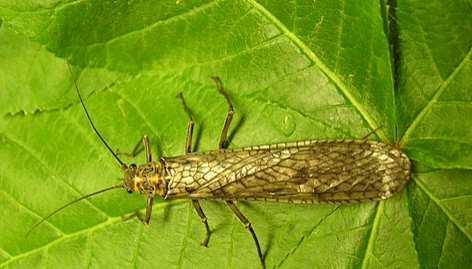
American Salmonfly (Pteronarcys californica) is a large species of stonefly in the family Pteronarcyidae. Native to western North America, it is one of the largest aquatic insects in the region and is well known among anglers due to its importance in freshwater ecosystems and its role as a food source for fish, particularly trout and salmon.
The American Salmonfly is not considered a pest. Instead, it is a beneficial aquatic insect that serves as an indicator of clean, well-oxygenated water and contributes significantly to aquatic food webs.
Taxonomy and Classification
- Common Name: American Salmonfly
- Scientific Name: Pteronarcys californica
- Order: Plecoptera
- Family: Pteronarcyidae
- Type: Stonefly (aquatic insect)
Stoneflies are a group of aquatic insects that are highly sensitive to pollution. Their presence is often used as an indicator of high water quality.
Identification and Physical Description
The American Salmonfly is a large insect, with adults measuring up to 2 to 2.5 inches in length and a wingspan of up to 3 inches. It is one of the largest stonefly species in North America.
Key identifying features include:
- Dark brown to black body
- Long, folded wings that extend beyond the abdomen
- Soft-bodied appearance
- Long antennae and two tail-like appendages (cerci)
Nymphs are aquatic and can reach similar lengths. They have:
- Flattened, segmented bodies
- Gills located along the thorax
- Strong legs adapted for clinging to rocks in flowing water
Life Cycle
The American Salmonfly undergoes incomplete metamorphosis, developing through egg, nymph, and adult stages.
Females lay eggs in streams or rivers. After hatching, nymphs live in the water for 2 to 4 years, making this one of the longest aquatic insect life cycles.
During this time, nymphs grow and molt multiple times while feeding on organic material.
When ready to mature, the nymph crawls out of the water onto rocks or vegetation and molts into a winged adult. Adults live only a few days to a couple of weeks, during which they mate and lay eggs.
Habitat and Distribution
The American Salmonfly is found primarily in western North America, particularly in:
- Cold, fast-flowing rivers and streams
- Mountain waterways
- Clean, well-oxygenated aquatic environments
It requires high-quality water and is rarely found in polluted or degraded habitats.
Behavior and Ecology
Nymphs are primarily aquatic and spend most of their lives beneath rocks and debris in flowing water. They are slow-moving but well adapted to resist currents.
Adults are weak fliers and are often found near water sources. They may crawl rather than fly and are most active during the brief emergence period.
The mass emergence of salmonflies, often called a “hatch,” is a notable ecological event that provides a major food source for fish and other wildlife.
As part of the ecosystem, salmonflies play a crucial role in nutrient cycling and energy transfer between aquatic and terrestrial environments.
Diet
The diet of the American Salmonfly varies by life stage:
- Nymphs: Decaying organic matter, algae, and plant material
- Adults: Limited feeding; may consume small amounts of plant material or not feed at all
Nymphs function as detritivores, helping break down organic matter in aquatic ecosystems.
Ecological Importance
The American Salmonfly is highly important in freshwater ecosystems:
- Provides a major food source for fish, birds, and other wildlife
- Indicates clean, healthy water conditions
- Contributes to nutrient cycling
- Supports aquatic biodiversity
Its presence is often used by scientists to assess water quality.
Human Interaction and Uses
The American Salmonfly is widely known among anglers, as its emergence triggers increased feeding activity in fish. It is commonly imitated in fly fishing with artificial lures.
It poses no risk to humans, as it does not bite or sting.
Management and Conservation
Conservation efforts focus on protecting aquatic habitats and maintaining water quality.
- Reduce pollution: Protect streams from contaminants.
- Preserve riparian zones: Maintain vegetation along waterways.
- Support sustainable water use: Protect natural flow regimes.
These practices help ensure the survival of salmonflies and other sensitive aquatic species.
Prevention
No prevention is necessary, as the American Salmonfly is beneficial and not harmful.
Encouraging healthy aquatic environments supports its continued presence.
Related Articles
Conclusion
The American Salmonfly is a remarkable aquatic insect that plays a vital role in freshwater ecosystems. Its long life cycle, ecological importance, and sensitivity to pollution make it an indicator of environmental health.
By protecting water quality and natural habitats, this species can continue to thrive and support diverse aquatic communities. It is best appreciated as a beneficial and essential component of North America’s river ecosystems.